Stage 1
| Compulsory Subjects | SACE Credits |
|---|---|
| English or Essential English or EAL | 20 Credits |
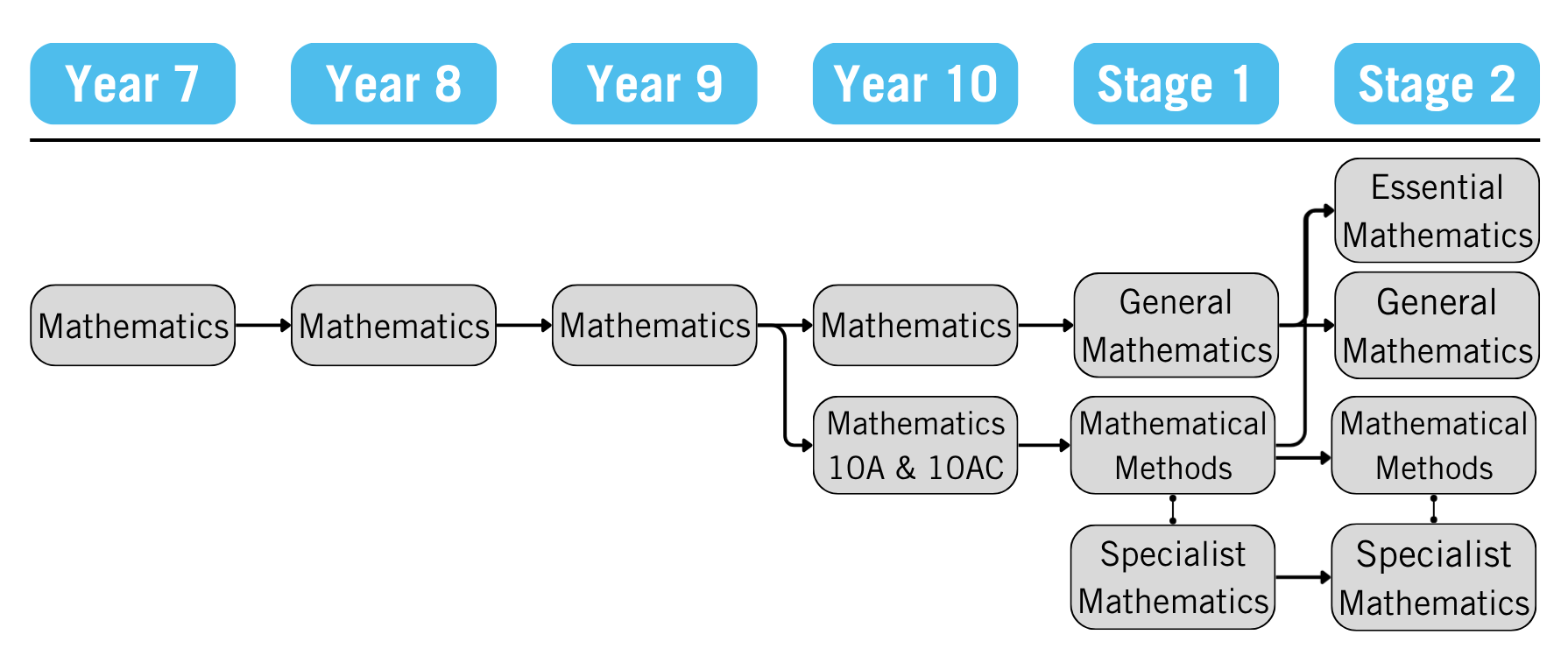
| General Mathematics or Mathematical Methods (1 semester) | 10 Credits |
| Exploring Identities and Futures (EIF) (Studied in Year 10) | 10 Credits |
| Activating Identities and Futures (AIF) – (Stage 2 subject, studied in Stage 1) | 10 Credits |
| Subjects | SACE Credits |
|---|---|
| Biology | 10 Credits |
| Business Innovation | 10 Credits |
| Chemistry | 10 Credits |
| Child Studies | 10 Credits |
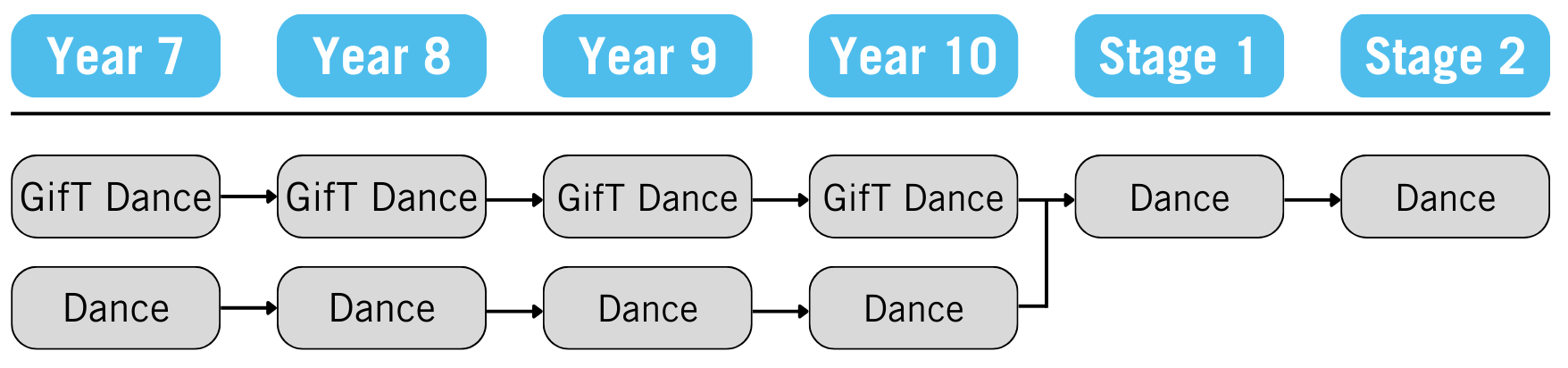
| Dance | 10 Credits |
| Technologies and Engineering | 10 Credits |
| Digital Media | 10 Credits |
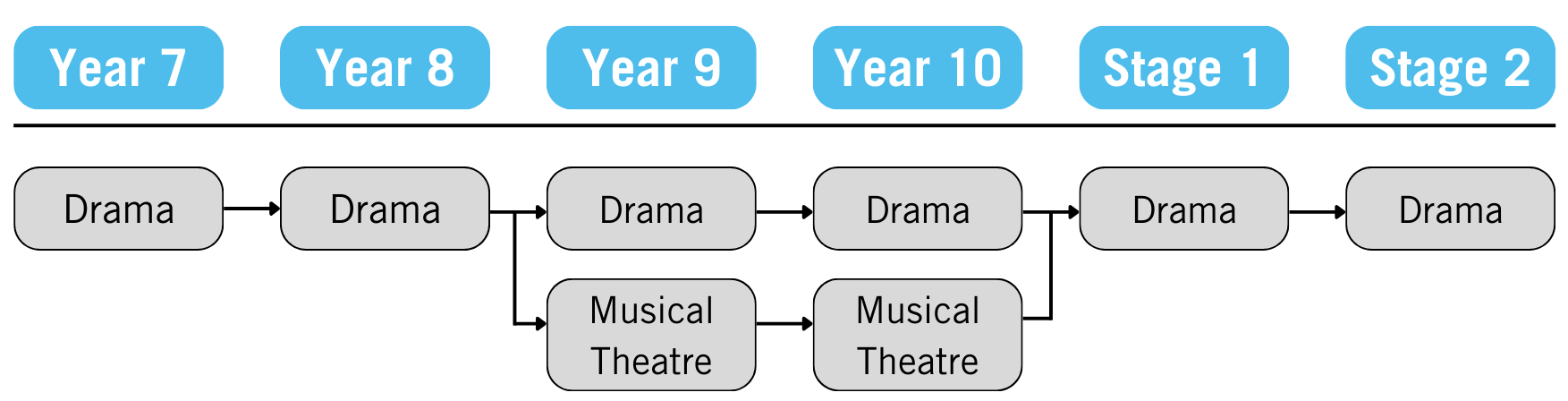
| Drama | 10 Credits |
| English Literary Studies | 10 Credits |
| Fashion and Textiles | 10 Credits |
| Food and Hospitality | 10 Credits |
| French (continuers) | 10 Credits |
| General Mathematics | 10 Credits |
| Health | 10 Credits |
| Italian (continuers) – dependent on availability | 10 Credits |
| Legal Studies | 10 Credits |
| Mathematical Methods | 10 Credits |
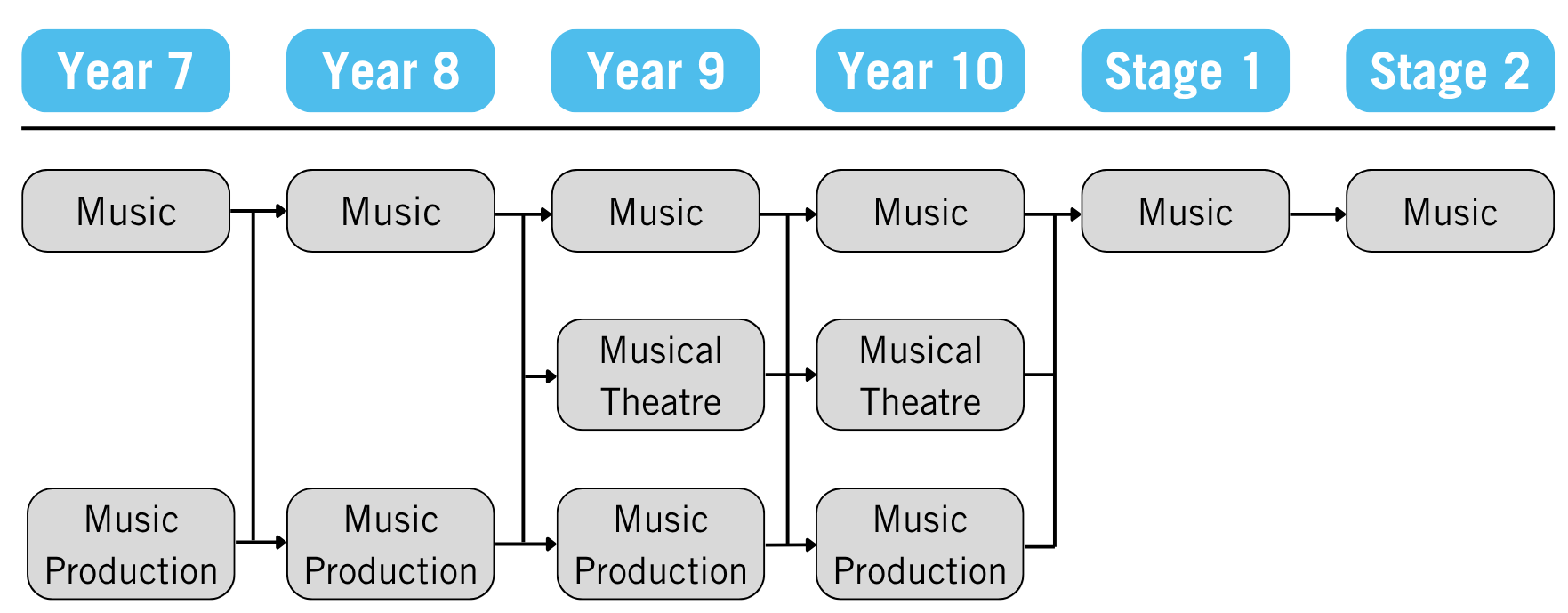
| Music | 10 Credits |
| Modern History | 10 Credits |
| Nutrition | 10 Credits |
| Physical Education | 10 Credits |
| Physics | 10 Credits |
| Podcast 101 | 10 Credits |
| Psychology | 10 Credits |
| Specialist Mathematics | 10 Credits |
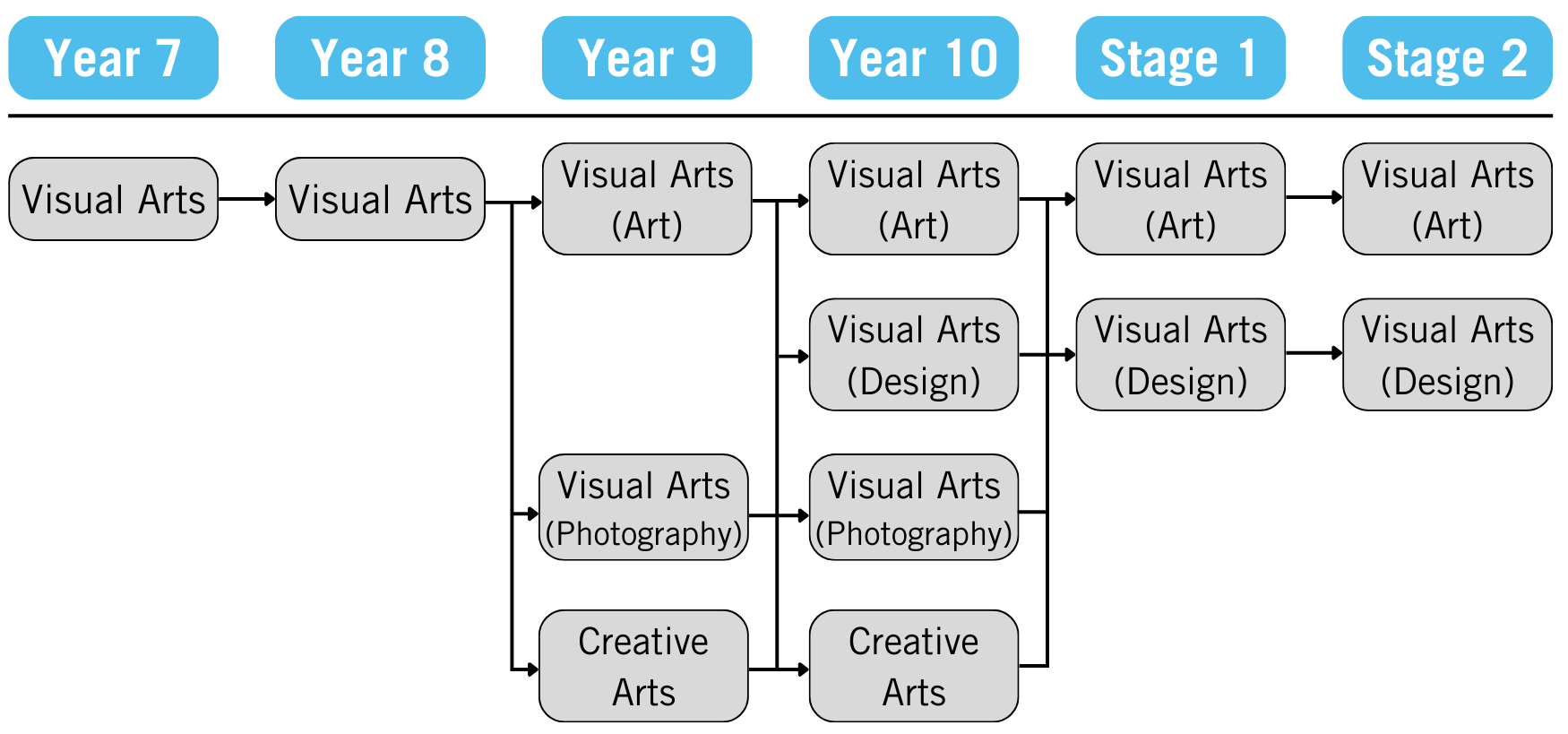
| Visual Arts – Art | 10 Credits |
| Visual Arts – Design | 10 Credits |
| Women’s Studies | 10 Credits |
Stage 1 - Subjects
All students must study subjects from the list shown below:
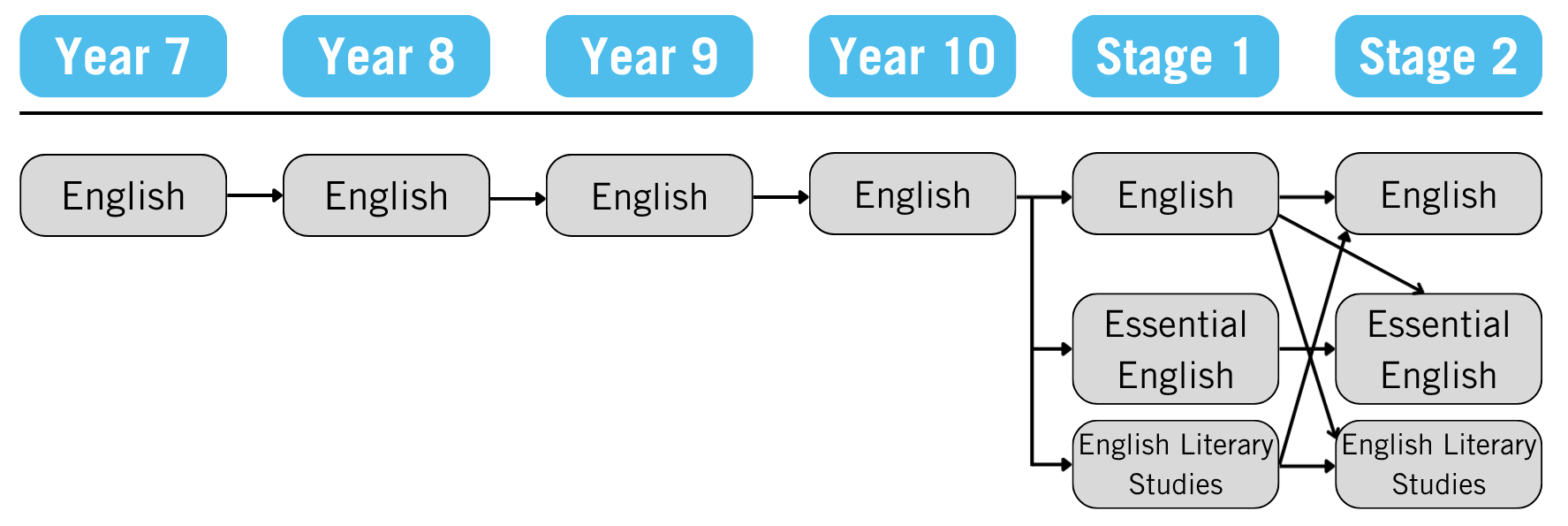
English and EAL
English
- Year Level: Stage 1
Description
English:
Students demonstrate a range of skills in response to studies of texts including novels, plays, short stories, poems and media. They apply their knowledge and understanding to produce texts of their own for differing purposes and audiences. Students develop an increased awareness of the connections between texts and how language can be used to communicate in diverse ways. Evidence of learning is provided by analysis of texts, creating their own texts and intertextual study.
Essential English:
Students demonstrate their skills in communication through interpretation and response to texts, and creation of a range of texts in contemporary forms. The subject is accessible to all students and provides an alternative approach to meeting the required literacy component for SACE. It focuses on a combination of real world and fictional text experiences. Evidence of learning is provided through text analysis, and multi-modal and written text creation. Assessment includes television, film and novel response questions, a social action speech, narrative writing and a multimodal response to an excursion.
English Literary Studies:
This Semester 2 course helps to prepare those students who are interested in undertaking Stage 2 English Literary Studies. It includes tasks unique to this subject including a transformative text and writer’s statement and a critical perspectives response. There is also an emphasis on expanding exam skills. Additionally, the subject focuses on challenging texts and on developing students’ comparative writing through anintertextual study for which they are able to choose one of the texts.
English as an Additional Language (EAL)
- Year Level: Stage 1-2
Description
SACE EAL subjects focus on the development and use of skills and strategies in communication, comprehension, research, language and text analysis, and text creation. Students explore information, opinions and experiences through writing and speaking in a range of contexts. Students analyse personal, social and cultural perspectives presented in texts.
Both Stage 1 and 2 EAL are available to students who speak English as an additional language (EAL), and whose knowledge of the English language is classified as restricted based on the SACE eligibility criteria.
Stage 1 EAL
Evidence of learning is provided by:
- Responding to texts
- Interactive Study
- Language Study
Stage 2 EAL
Evidence of learning is provided by:
- Academic Literacy Study (30%)
- Responses to Texts (40%)
- Examination (30%) (Externally Assessed)

HASS
HASS
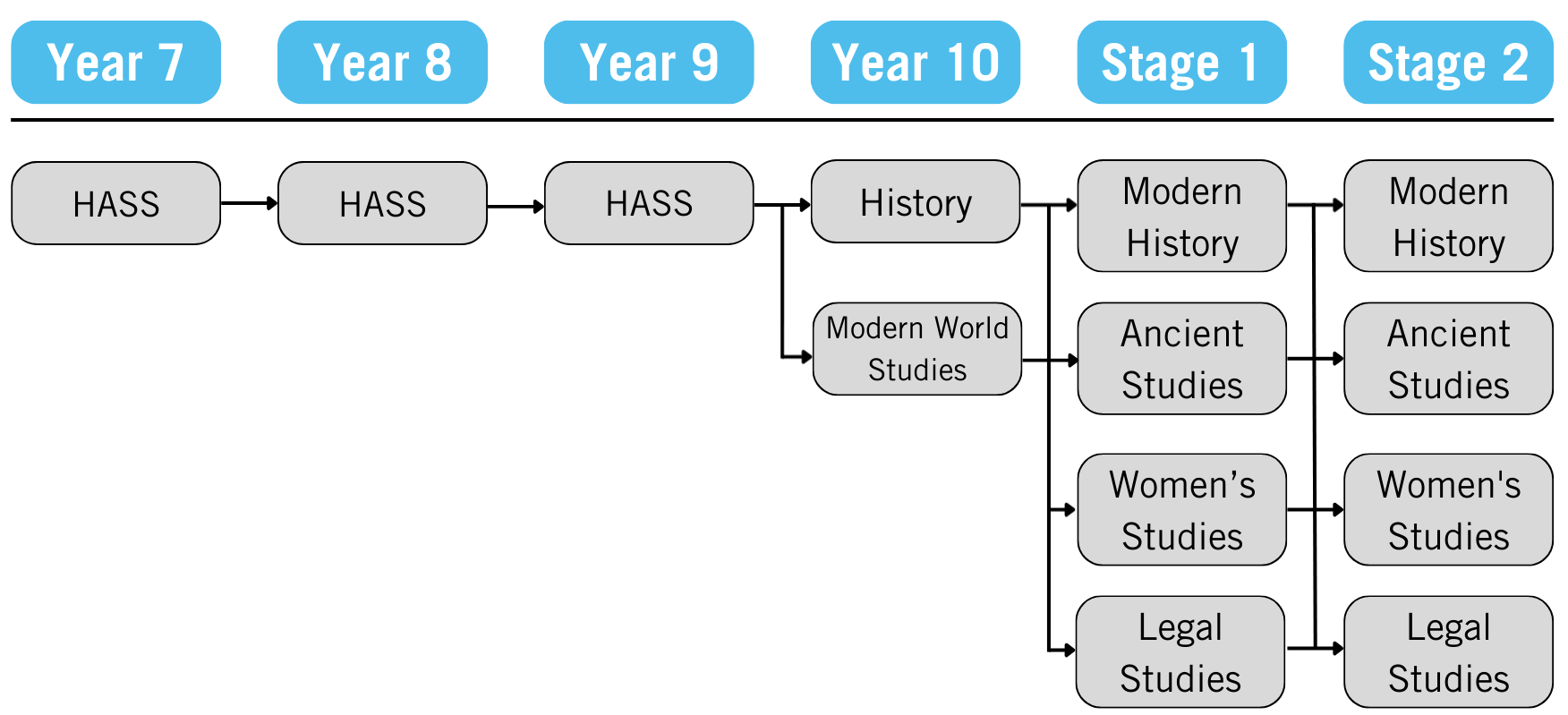
- Year Level: Stage 1
Description
Modern History:
Whilst exploring the changes in the world since 1750, students examine development and movements of significance, the ideas that inspired them and their short and long- term consequences on societal systems and individuals. Students are encouraged to be critical thinkers and develop skills in persuasive and informed writing. Students undertake an individual study on a topic of their choice. Other in-depth studies may include revolutions and movements for change. There is scope for students to shape the content of the course and to present work in a range of formats.
Women’s Studies:
Students examine the diversity of women’s experiences and their relationships to others while also investigating how we can promote an inclusive and just society. Students identify complex and contradictory ideas that exist about femininity and masculinity and examine issues in regard to gender and the gender spectrum within society. Students complete two text analysis tasks, one group task and an independent investigation.
Ancient Studies:
In Stage 1 Ancient Studies students focus on exploring ancient societies, cultures, and historical events. Students engage with primary and secondary sources to understand the development of ancient civilisations, their social structures, belief systems, and contributions to the modern world. The course encourages critical thinking, analysis, and reflection on the influence of ancient societies on contemporary life. Through various assessments, students develop skills in research, communication, and historical inquiry.
Legal Studies:
Stage 1 Legal Studies focuses on the use of laws and legal systems to create harmony within dynamic and evolving communities. Through an inquiry-based process, students explore and develop their understanding of the concepts of rights, fairness and justice, power, and change. These concepts are examined in the context of law-making, law enforcement, and dispute resolution, and should be applied to a range of contemporary Australian issues. Opportunities exist to consider alternative perspectives such as international law, customary law, and systems used in other jurisdictions.
Legal Studies is explored through the mechanism of asking ‘big questions’. Big questions are typically open ended, stimulate deep and conceptual thinking, and involve the consideration of a range of perspectives. Big questions encourage debate and active learning. In providing a response to the questions, students must evaluate, analyse and apply contextually appropriate legal principles, processes, evidence, and cases.
Through Legal Studies, students develop an appreciation and awareness of their role as a citizen in the Australian legal system, the skills to communicate their ideas, and the confidence to make informed and effective decisions regarding legal issues.
Health & PE
Activating Identities and Futures (AIF)
- Year Level: Stage 1
Description
The purpose of Activating Identities and Futures is for students to take greater ownership and agency over their learning (learning how to learn) as they select relevant strategies (knowing what to do when you don’t know what to do) to explore, create and/or plan to progress an area of personal interest towards a learning output.
Students explore ideas related to an area of personal interest through a process of self-directed inquiry. They draw on knowledge, skills and capabilities developed throughout their education that they can apply in this new context and select relevant strategies to progress the learning to a resolution. The focus of the exploration aims to develop capabilities and support students in their chosen pathways.
School assessment:
- Assessment Type 1: Portfolio (35%)
- Assessment Type 2: Progress Checks (35%)
External assessment:
- Assessment Type 3: Appraisal (30%)
Exploring Identities and Futures (EIF)
- Year Level: Stage 1
Description
The intention behind EIF is to assist students to recognise their individual strengths and see that the purpose and value of learning is much more than knowledge and grades. Through EIF students will:
Explore identity and belonging
Develop agency
Pursue and develop an area of interest that matters to them
In EIF students will lead their own learning and use a self-directed approach to move away from the old ‘what do you want to do’ and towards ‘who do you want to be.’
EIF will meet the requirements for SACE completion currently satisfied by PLP. This is a mandatory Stage 1 subject offered in Year 11.
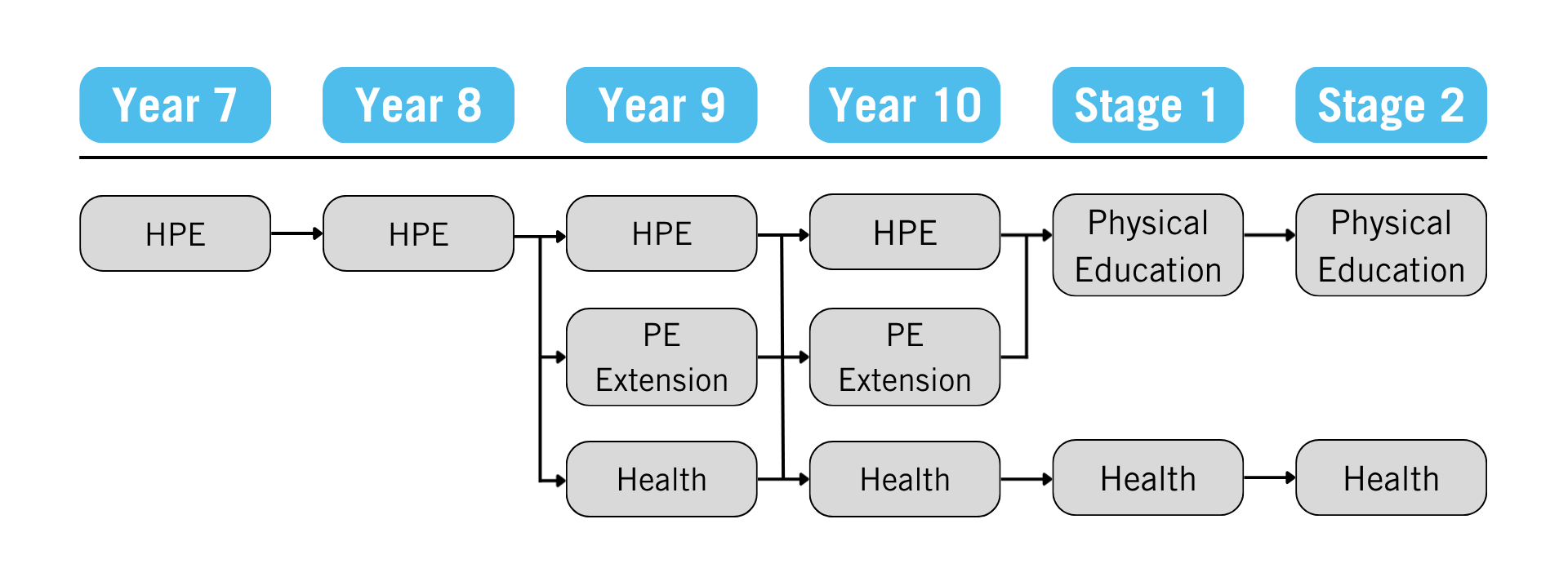
Health and Wellbeing
- Year Level: Stage 1
Description
Students investigate factors that shape the behaviours and attitudes of individuals and groups in relation to health and wellbeing. They develop skills to consider and recognise how social structures, community values, environmental issues and new technologies affect the health and wellbeing of individuals and communities. Evidence of learning is demonstrated through:
- Assessment Type 1: Sleep Hygiene Action Plan – weighting 30%
- Assessment Type 1: Collaborative – Adolescent Health Promotion – weighting 30%
- Assessment Type 2: Inquiry Issue – Drug/Alcohol Related Health Issues– weighting 40%
Physical Education
- Year Level: Stage 1
Description
Stage 1 Physical Education courses are offered to Year 11 students and are designed to prepare students for Stage 2 Physical Education. Learning is delivered through an integrated approach in which opportunities are provided for students to undertake, and learn through, a wide range of authentic physical activities.
SACE Stage 1 Physical Education consists of theory and practical components. The content of each course is slightly different, and it is highly recommended that students who intend to study Stage 2 Physical Education complete the multiple Stage 1 Physical Education courses on offer. The following assessment types enable students to demonstrate their learning in Stage 1 Physical Education:
- Assessment Type 1: Performance Improvement
- Assessment Type 2: Physical Activity Investigation
Languages
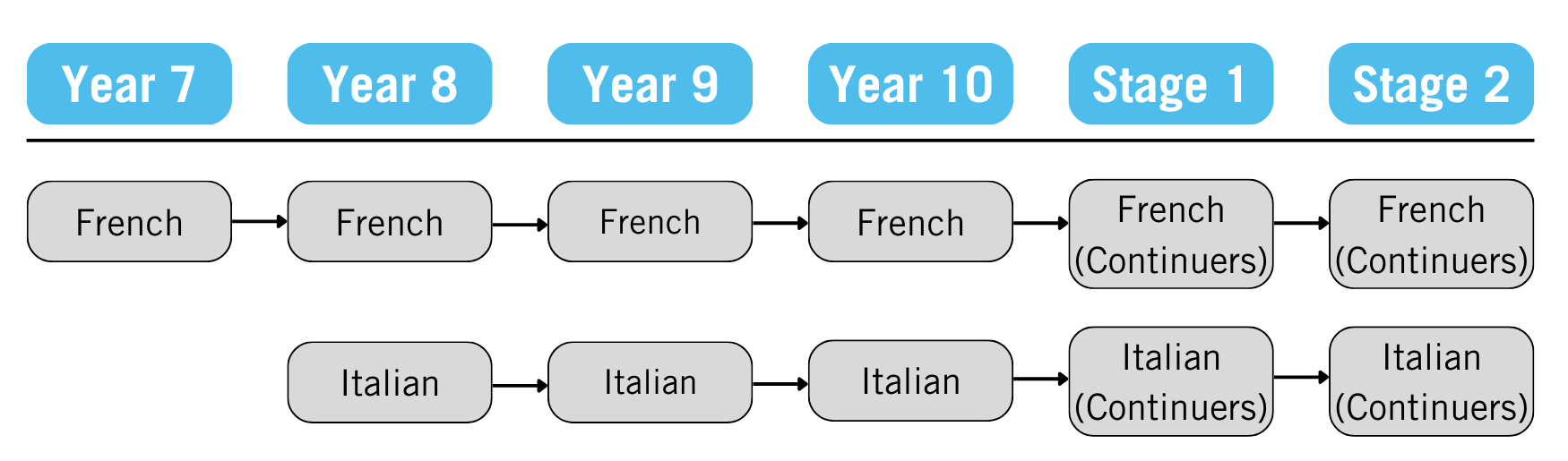
Languages: French or Italian
- Year Level: Stage 1
Description
Students interact with others to share information, ideas, opinions and experiences. They analyse texts to interpret meaning, examine relationships between language and culture, and identify and reflect on ways in which culture influences communication. Students learn about aspects of either the French or Italian lifestyle through the study of written, aural, oral or visual texts. Courses are divided into three themed topic areas which classes may select from a range of prescribed sub-topics. Students are assessed against four key areas of evidence: interaction, text production, text analysis and investigation.
Mathematics
Mathematics
- Year Level: Stage 1
Description
General Mathematics:
This course gives students opportunities to develop their skills by applying them to real world problems and looking in depth at extended projects. With these investigations, there is scope for students to connect to other curriculum areas and align these to their own interests. The course focuses on modelling and application, rather than the more abstract mathematical concepts. Topics studied are measurement, statistics, finance, linear and exponential modelling, matrices and networks.
Mathematical Methods:
For students who have completed and enjoyed 10A Mathematics, or who have a passion for STEM subjects and hope to continue this into Year 12 and beyond, this course is an essential choice. It not only builds on mathematical skills from 10A Mathematics but, with the introduction of calculus, students develop some powerful concepts which are applied to a variety of settings.
Specialist Mathematics:
Specialist Mathematics introduces students to some new topics and concepts which are crucial for further study of Advanced Mathematics and Physics in Year 12 and beyond. It is strongly recommended that students wishing to study Mathematics, Physics, Computer Science or Engineering courses at university complete Specialist Mathematics at Stage 1 and 2. Vectors and complex numbers are met for the first time and the ability to formulate proofs is developed further. With trigonometry also explored in more detail, this course is of interest to those students who enjoy learning new concepts and are wanting to continue into STEM careers, where knowledge from this subject is highly advantageous for courses in these fields.
Science
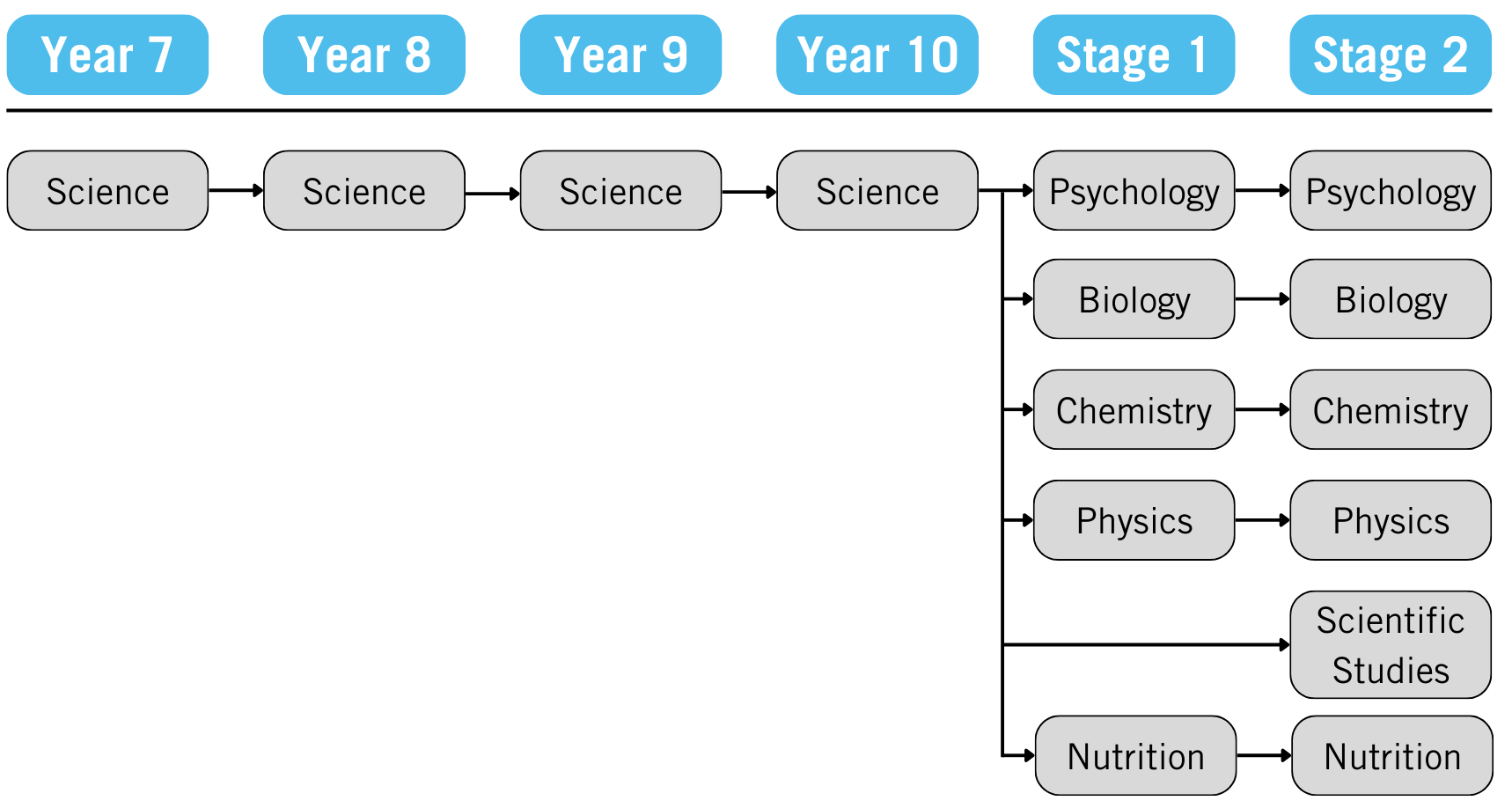
Biology
- Year Level: Stage 1-2
Description
Stage 2 Biology students learn about organisms and their surroundings. They look at the chemicals used and built within the cells and the functions and types of cells in complex multicellular organisms. Students then look at how these cells work together in systems within an organism, finishing with how organisms have evolved and adapted to their changing environments, or died out in the process.
Students plan and execute biological investigations, collecting evidence on topics such as:
- DNA and Proteins
- Cells – Structures and Functions
- Homeostasis
- Evolution.
Chemistry
- Year Level: Stage 1-2
Description
Students study matter that makes up materials and the properties, uses, means of production and reactions of these materials. The course includes a critical study of the social and environmental impact of materials and chemical processes. Students consider how human beings make use of the Earth’s resources and the impact of human activity on the environment. Through practical studies, students develop investigation skills and an understanding of the physical world that enables them to be questioning, reflective and critical thinkers.
This full year practical-based subject introduces students to the concepts of Chemistry through a study of the following topics:
- Bonding
- Chemical Reactions
- Materials
- Stoichiometry
- Organics
- Electrochemistry
- Polymers
Stage 2 Chemistry is organised so that each intended student learning outcome is related to a key chemical idea or concept within topics. Through the study of these key ideas and concepts, students develop their chemistry investigation skills.
Topics:
- Monitoring the Environment
- Managing Chemical Processes
- Organic and Biological Chemistry > Managing Resources
Nutrition
- Year Level: Stage 1
Description
In the subject of Nutrition, students use cross-disciplinary focuses, delving into the essential principles of nutrition, physiology, and health. Throughout the course, they investigate areas, including health promotion, emerging trends, and sustainable food systems, while refining their nutrition literacy and numeracy. Embracing the ever-evolving landscape of nutrition technology, students actively engage in cutting-edge practices, where they seamlessly integrate science inquiry skills into their learning process.
Moreover, they gain a profound understanding of science as a human endeavor, appreciating the significant impact of nutrition on our lives now and in the future. Witnessing the ongoing advancements in nutritional science, students recognize the importance of new ideas and technologies, empowering them to make informed and impactful decisions for a healthier and more sustainable world.
This subject incurs an additional subject levy. In 2024 the fee was $60 per semester but this may be subject to change in 2025.
Physics
- Year Level: Stage 1-2
Description
Students have opportunities to understand and appreciate the natural world. As well as applying knowledge to solve problems, students develop skills in experimentation, investigation design, collection of information and communication through practical and other learning activities. Students gather evidence from experiments and acquire new knowledge through their own investigations and research.
In this full year SACE Stage 1 course, students further develop their understanding of interactions that occur in the universe through the following topics:
- Motion
- Sound and Light
- Force
- Nuclear Physics
- Electromagnetism
- Energy
Stage 2 Physics requires the interpretation of physical phenomena through a study of motion, electricity and magnetism, and light and matter.
As well as applying knowledge to solve problems, students develop skills in experimentation, investigation design, collection of information and communication through practical and other learning activities.
Psychology
- Year Level: Stage 1-2
Description
Students are enabled to understand their own behaviours and the behaviours of others, as it has direct relevance to their personal lives. Psychological knowledge can be applied to improve outcomes and the quality of experience in various areas of life, such as education, relationships, child rearing, employment and leisure.
Psychology builds on the scientific method by involving students in the collection and analysis of data. By emphasising evidence- based procedures (i.e. observation, experimentation and experience) students develop useful skills in analytical and critical thinking and in making inferences.
In SACE Stage 1, students study:
- Cognitive Psychology
- Neuropsychology
- Lifespan Psychology
- Exercise and Sports Psychology
- Psychological Wellbeing
- Psychology in Context
In SACE Stage 2, topics include:
- Psychology of the Individual
- Psychological Health and Wellbeing
- Organizational Psychology
- Social Influence
- The Psychology of Learning
Technologies
Podcast 101
- Year Level: Stage 1
Description
Students demonstrate their skills of communication through the creation, production and analysis of podcasts. Students will gain hands-on experience in crafting their own podcasts and enhancing their communication abilities and digital literacy skills. Evidence of learning is provided through a range of modes including but not limited to: multimodal, discussion, written texts and speaking and listening.
Technologies
- Year Level: Stage 1
Description
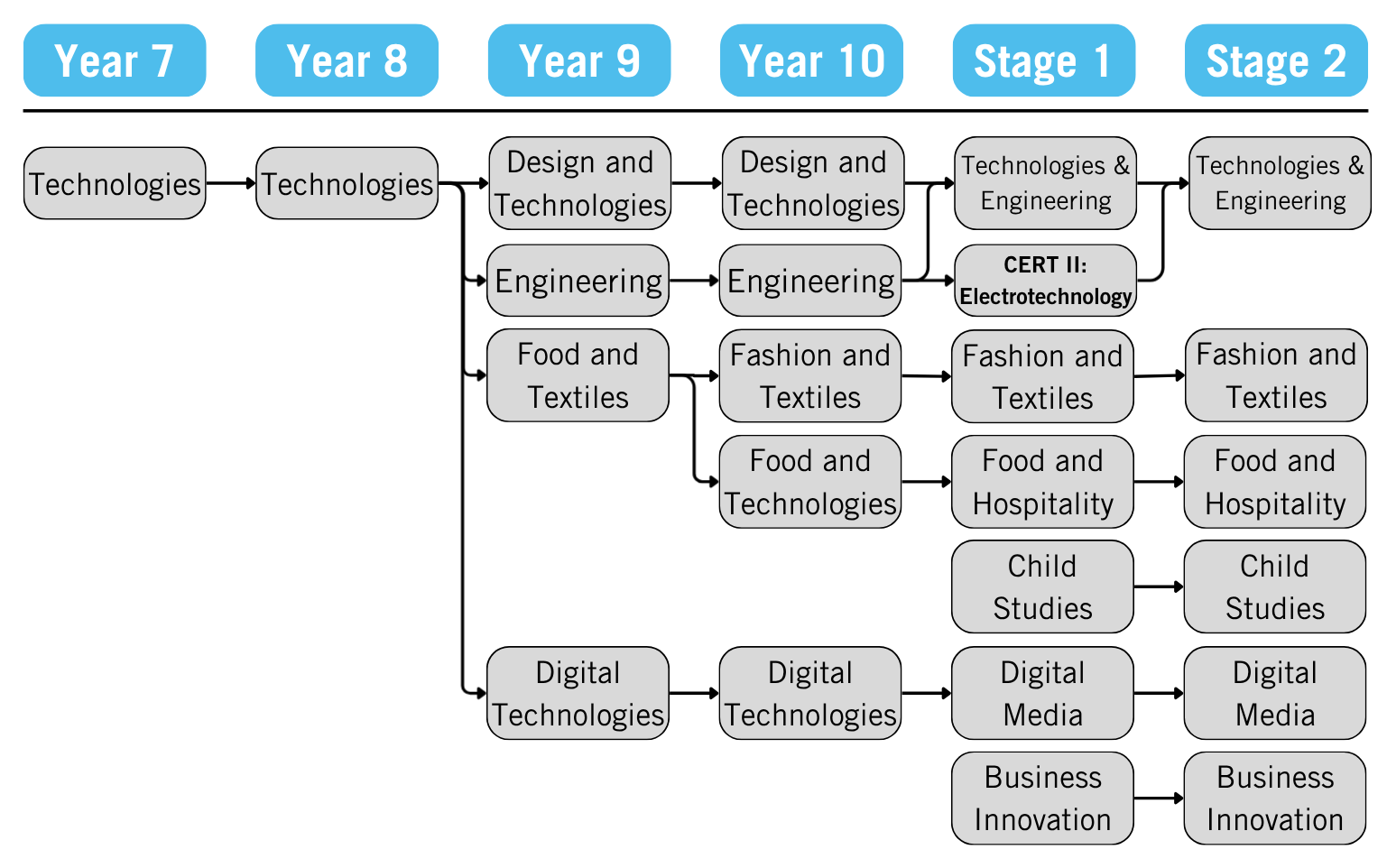
Technologies & Engineering:
Technologies and Engineering provides a pathway for students who have studied Year 10 Design and Technologies and/or Engineering. Students investigate a range of existing products, systems or materials, then develop their own projects that are negotiated according to student interest areas. Major projects can include and range or combination of product design, robotics, digital electronics, furniture design and construction.
Fashion and Textiles:
Students will develop practical skills in garment design and manufacture. This equips them with the skills and knowledge required when considering career opportunities in fashion design and related occupations. Students use a range of skills and production techniques including the use of hand tools, machines and equipment to design and make garments.
Food & Hospitality:
Students focus on the dynamic nature of the food, both locally and globally, whilst developing an understanding of a range of contemporary approaches in the hospitality industry. Students participate in a range of authentic and collaborative activities including coordinating catering events at school. Students will also get the opportunity to work with and visit a hospitality venue to develop their critical understanding to solve industry related problems.
This subject incurs an additional subject levy. In 2024 the fee was $80 per semester but this may be subject to change in 2025.
Child Studies:
Child Studies focuses on children and their development from conception to 8 years. Students explore concepts such as the development, needs, and rights of children, the value of play, concepts of childhood and families, and the roles of parents and care-givers. Students investigate contemporary issues that are relevant to children and their development.
Digital Media:
Students will have the opportunity to further their learning Photography and Graphic Design during Semester 1 with Film production and Animation being the focus in semester 2. The aim of these areas will be on developing industry standard skills by using Adobe software programs. These will range from Adobe Photoshop, Illustrator and InDesign for photography and graphical projects with Premiere Pro, After Effects and Animate to create interactive projects.
Business Innovation:
Students in Year 11 develop business skills and knowledge that enables them to identify opportunities and initiate, create, and successfully implement solutions through the context of a ‘start- up’ business. Students communicate with a range of stakeholders to inform and refine their solutions.
The Arts
Dance
- Year Level: Stage 1-2
Description
At SACE Stage 1, students study dance technique, composition, choreography, performance and the critical analysis of dance works.
At SACE Stage 2, students develop creative, technical and physical understandings and appreciation of dance as an art form.
Through the analysis of dance theatre performance, students learn about the choreography of local and international dance artists. They have the opportunity to explore a range of global dance traditions, influences and perspectives.
Drama
- Year Level: Stage 1-2
Description
At Stage 1, students plan, rehearse and perform a dramatic work. They write and perform or design a production based on an investigation into a dramatic innovator or a style/s of drama. Students learn how to analyse their own dramatic and creative process, performance outcomes and the creative choices of others, through reflective writing. Assessment is based on these practical and written activities. At Stage 2, students work collaboratively to develop and sustain a theatre company, which guides the direction of their major production and other creative performance pieces throughout the course. To ensure the success of their theatre company, students may take on various roles either on or off stage. They analyse, reflect on and evaluate their own dramatic processes. They interpret and analyse dramatic works and innovators through performance tasks and written and multimodal responses. Their assessment is based on a combination of these practical and written tasks.
Music
- Year Level: Stage 1-2
Description
At Stage 1 Music students perform as soloists and in ensembles, and complete a composition, arrangements and reflection on their work. They can choose to focus on additional performances or more analysis and theory. Music Theatre/Voice can be chosen within this course.
At Stage 2 students can choose:
- a full-year 20-unit course from Music Studies, Music Explorations or Music Performance (Solo AND Ensemble)
- a full-year 10-unit Music Performance (Solo OR Ensemble)
- Music Studies or Music Explorations (20 units) AND Solo or Ensemble (10 units)
- Music Studies or Music Explorations (20 units) AND both Solo AND Ensemble (20 units)
Completing Solo or Ensemble without the other usually does not contribute towards ATAR. These choices are made in negotiation with their Music Teacher and through Course Counselling. Solo, Explorations and Ensemble (with a weekly lunchtime band) can be quite independent and can be completed offline by motivated and independent students.
Please note Music incurs an additional subject levy from year 8 to 12.
Students who choose to participate in Instrumental Music lessons will be charged the $110 per semester Music Subject Fee.
- If your young person participates in both Music and Instrumental Music, you will not be charged twice. The Music Subject Fee covers their participation in both.
- If your young person participates in Instrumental Music only and does not take a Music class, the Music Subject Fee still applies.
Visual Arts
- Year Level: Stage 1
Description
Art:
Students can choose 1 or 2 semesters of Art. The content is different in each Semester and allows students to follow individual artistic preferences.
Major Art works can be paintings, drawings, prints, digital painting, 3D works, or any other chosen media.
A folio of work includes experimentation with media and techniques, the development of an artistic idea, and a record of the process of creating the final Artwork.
Students will complete one Visual Study, researching an Artist, analysing their works, creating a practical interpretation and evaluating their learning.
Design:
Students can choose 1 or 2 semesters of Design. The content is different in each Semester and allows students to follow individual Design preferences.
Major Design works can be architectural models, fashion, graphics, digital graphics, gaming design, furniture, product design, packaging design or any other design genre.
A folio of work includes defining the brief, ideation, problem solving, design decision making and the process of making the final Design work.
Students will complete one Visual Study, researching a Designer, analysing their works, creating a practical interpretation and evaluating their learning.
Creative Arts:
The school offers students the opportunity to study Creative Arts within existing Stage 1 or 2 Arts classes. However, enrolment in these courses is individually negotiated with the teacher and Faculty Leader. This strand of The Arts allows students to investigate, develop and produce arts products which cross over and/or combine Arts practice from any Arts field.